
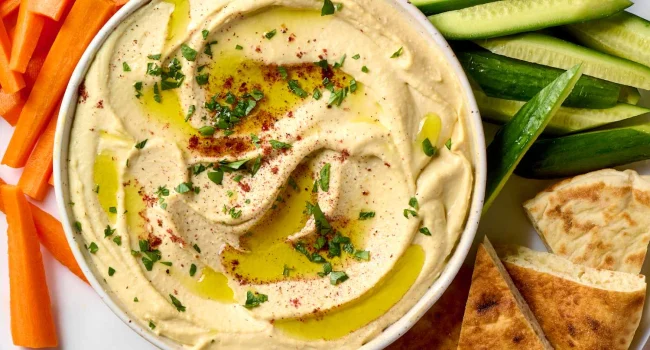
Hummus is a good source of protein, fiber, and iron, thanks in part to tahini.
No one knows for sure who invented it. From Lebanon to Egypt, and from Syria to Turkey, many Middle Eastern countries lay claim to the dish, with references dating back to the 13th century, writes the Daily Mail.
Despite its reputation as a healthy food, some dieters avoid it due to its calorie and fat content.
How healthy is hummus?
“In general, I would say it is a healthy food,” said nutritionist and author Jenna Hope. “It’s a good source of protein, fiber, and iron, thanks in part to the tahini.”
According to her, the healthy fats help keep you full for longer, and the fiber is important for gut health—a topic that is currently widely discussed.
What is in hummus?
A classic hummus recipe contains just five main ingredients: chickpeas, garlic, lemon, tahini, and olive oil.
A 100 g serving contains about 170 calories:
- 8–10 g of fat
- 11–14 g of carbohydrates
- around 6 g of fiber
- 6–8 g of protein
Saturated fat is less than 2 g per 100 g.
According to NHS guidelines (up to 70 g of fat per day for women and up to 95 g for men), this serving fits well within a balanced diet.
The fats in hummus are mostly mono- and polyunsaturated, which are associated with better heart health and may support cognitive function.
Is hummus healthy?
Each ingredient provides its own benefits:
- Chickpeas are rich in plant protein.
- Tahini contains antioxidants linked to reduced risk of cancer and Alzheimer’s disease.
- Garlic may help lower blood pressure and cholesterol.
- Lemon is high in vitamin C, which is beneficial for skin.
- Olive oil is a key part of the Mediterranean diet and is linked to improved heart health.
Additionally, the vitamin C in lemon juice helps improve the body’s absorption of iron from tahini.
However, experts warn that store-bought hummus may contain preservatives and additives, so it’s best to choose products with a simple ingredient list.
Is hummus high in protein?
While hummus is not extremely high in protein, it remains a good plant-based source—around 6–9 g per 100 g.
This makes it especially popular among vegetarians and vegans.
Is hummus high in fat?
Hummus contains about 20% fat, so it is not a low-fat food. However, most of the fat comes from “good” sources like olive oil and tahini, which can help lower cholesterol.
Can hummus lower cholesterol?
A study showed that eating about 160 g of cooked chickpeas daily may help reduce cholesterol levels.
Additionally, the British Heart Foundation lists hummus among foods that may help reduce dependence on high-cholesterol foods.
Is hummus suitable for people with irritable bowel syndrome (IBS)?
Chickpeas are considered high-FODMAP foods—carbohydrates that can trigger bloating, gas, and diarrhea.
People with IBS are advised to limit servings to 1–2 tablespoons or prepare hummus at home with fewer chickpeas and added ingredients like carrots to reduce FODMAP content.
Garlic can also cause discomfort, so sometimes garlic oil is used instead of whole cloves.
Is hummus gluten-free?
In its classic form, yes. However, store-bought hummus should always be checked for additives that might contain gluten.
Can hummus lower cholesterol?
A study showed that eating about 160 g of cooked chickpeas daily may help reduce cholesterol levels.
Additionally, the British Heart Foundation lists hummus among foods that may help reduce dependence on high-cholesterol foods.
Is hummus suitable for people with irritable bowel syndrome (IBS)?
Chickpeas are considered high-FODMAP foods—carbohydrates that can trigger bloating, gas, and diarrhea.
People with IBS are advised to limit servings to 1–2 tablespoons or prepare hummus at home with fewer chickpeas and added ingredients like carrots to reduce FODMAP content.
Garlic can also cause discomfort, so sometimes garlic oil is used instead of whole cloves.
Is hummus gluten-free?
In its classic form, yes. However, store-bought hummus should always be checked for additives that might contain gluten.
